Saffron Crocus — Antique Botanical Print
Saffron Crocus — Antique Botanical Print
Couldn't load pickup availability
The Story in the Margin
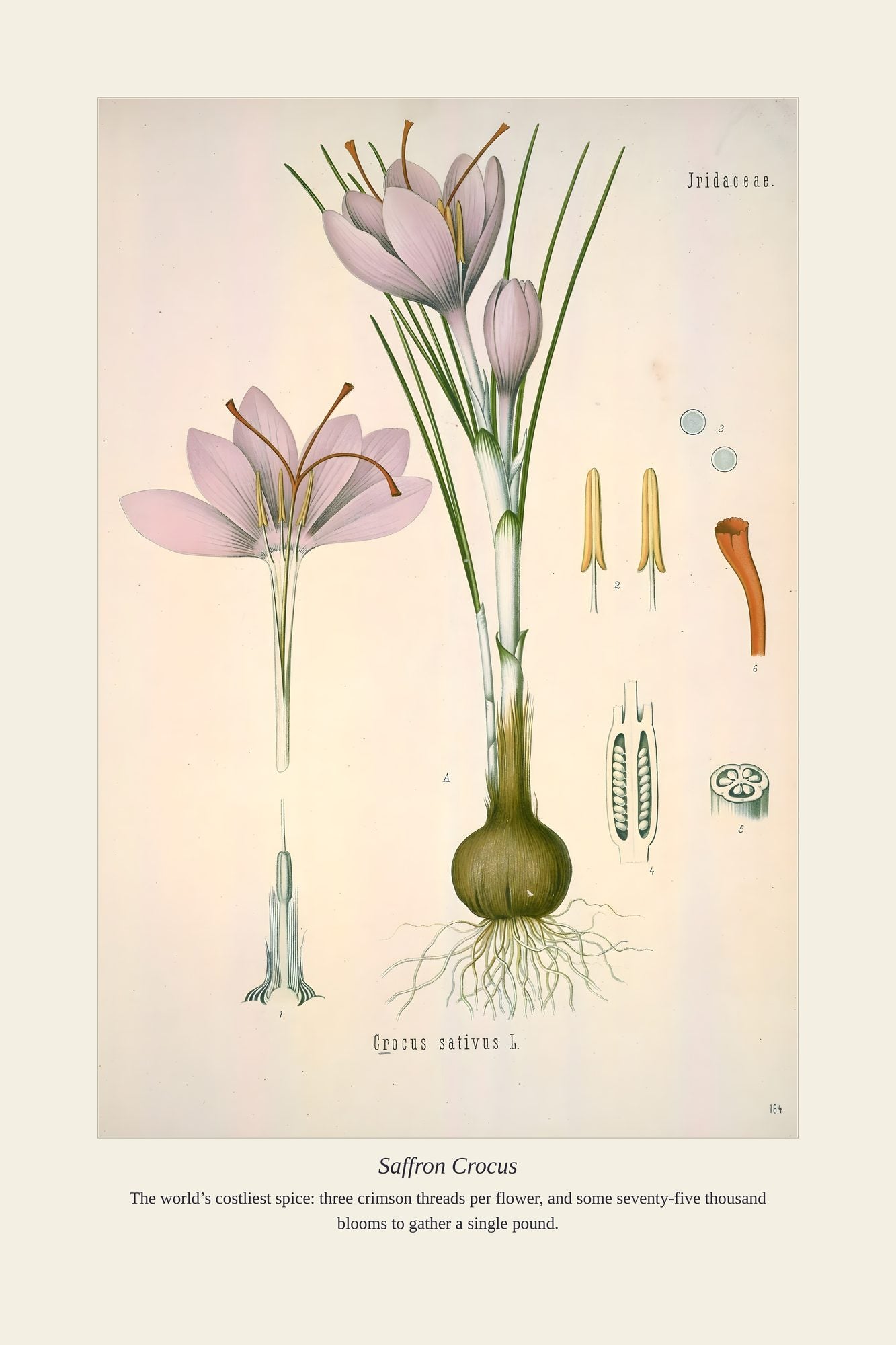
Saffron crocus (Crocus sativus) is a sterile, human-bred clone unknown in the wild, believed to have been developed from the wild species Crocus cartwrightianus in Bronze Age Greece around 1700 BCE — a domestication captured in 3,600-year-old Minoan frescoes from Crete and Santorini that depict the harvesting of its threadlike stigmas. Because the plant cannot set viable seed, every saffron crocus grown today is propagated by hand from divided corms, a testament to nearly four millennia of continuous cultivation. Each autumn flower yields only three fragile crimson stigmas, picked by hand at dawn; roughly 440,000 stigmas are needed to produce a single kilogram of spice, making saffron the most labour-intensive and expensive spice in the world by weight. That scarcity, and the flower's delicate lilac bloom, made the saffron harvest a favourite subject for the artists and botanists of the cultures that prized it.
Materials & origin
- Material: 200 gsm gallery-grade, acid-free fine-art paper (FSC-certified).
- Print: Archival giclée, 12-colour printing, smooth matte finish for glare-free display.
- Artwork: Restored from a public-domain original; colour and detail digitally cleaned for large-format print.
- Origin: Made on demand and shipped from the print hub nearest you, cutting transit and waste.
- Framing: Sold unframed; ships rolled in a protective tube.
Share
As Featured In